
EV Brake Service Guide
EV Brake Service Guide
Posted on August 20, 2026
Do EV Brakes Still Need Service?
Electric vehicles can use regenerative braking to recover energy while slowing down. That often reduces how frequently the physical brake pads are used, but it does not eliminate the conventional friction-brake system or its maintenance needs.
For EV drivers around Orillia and Cottage Country, moisture, winter road salt, temperature changes, and periods of light brake use can all affect brake condition. An EV may need less frequent pad replacement in some driving patterns while still benefiting from regular brake inspections.
Regenerative Braking vs. Friction Braking
| System | How It Slows the Vehicle | Why It Still Matters |
|---|---|---|
| Regenerative braking | Uses the electric drive system to slow the vehicle and return some energy to the battery | Its availability and strength can vary with vehicle settings, battery condition, temperature, traction, and driving circumstances |
| Friction braking | Uses brake pads, rotors, calipers, and hydraulic pressure | Provides stopping capability when more deceleration is required and works as part of the vehicle’s blended braking system |
Even EVs designed for strong one-pedal driving retain a physical brake pedal and conventional service-brake components. Drivers must always be prepared to use the brake pedal when needed.
Why EV Brakes Have Different Inspection Needs
Brake pads normally sweep across the rotors during use. When regenerative braking handles much of the deceleration, the friction brakes may operate less often. That can reduce pad wear, but moisture and road salt may remain on brake components longer.
Surface rust after wet weather or washing can be normal and may clear during ordinary braking. Persistent corrosion, uneven rotor surfaces, sticking components, or changes in braking performance require inspection.
EV Brake Components That Still Need Attention
- Brake pads and rotors: These can wear, corrode, glaze, or develop uneven contact.
- Calipers and hardware: Moving parts can stick when affected by corrosion or contamination.
- Brake fluid: Fluid condition and replacement timing still matter in an EV’s hydraulic braking system.
- Brake hoses and lines: These require inspection for leaks, damage, and corrosion.
- Electronic controls: Warning messages or unexpected braking behaviour need professional diagnosis.
Signs Your EV Brakes Need Inspection
Book an inspection if you notice grinding, persistent scraping, pulling during braking, pedal pulsation, reduced stopping confidence, a soft pedal, a burning smell, or a brake warning. A change in the transition between regenerative and friction braking should also be assessed.
If braking ability is reduced or a warning instructs you to stop, park safely and arrange assistance instead of continuing to drive.
How Often Should EV Brakes Be Serviced?
There is no single interval that applies to every Chevrolet EV or every driver. Follow the Owner’s Manual for your exact model and account for local conditions, mileage, storage, and driving patterns. Physical inspection remains important because pad thickness alone does not reveal corrosion or restricted movement.
Certified EV Maintenance in Orillia
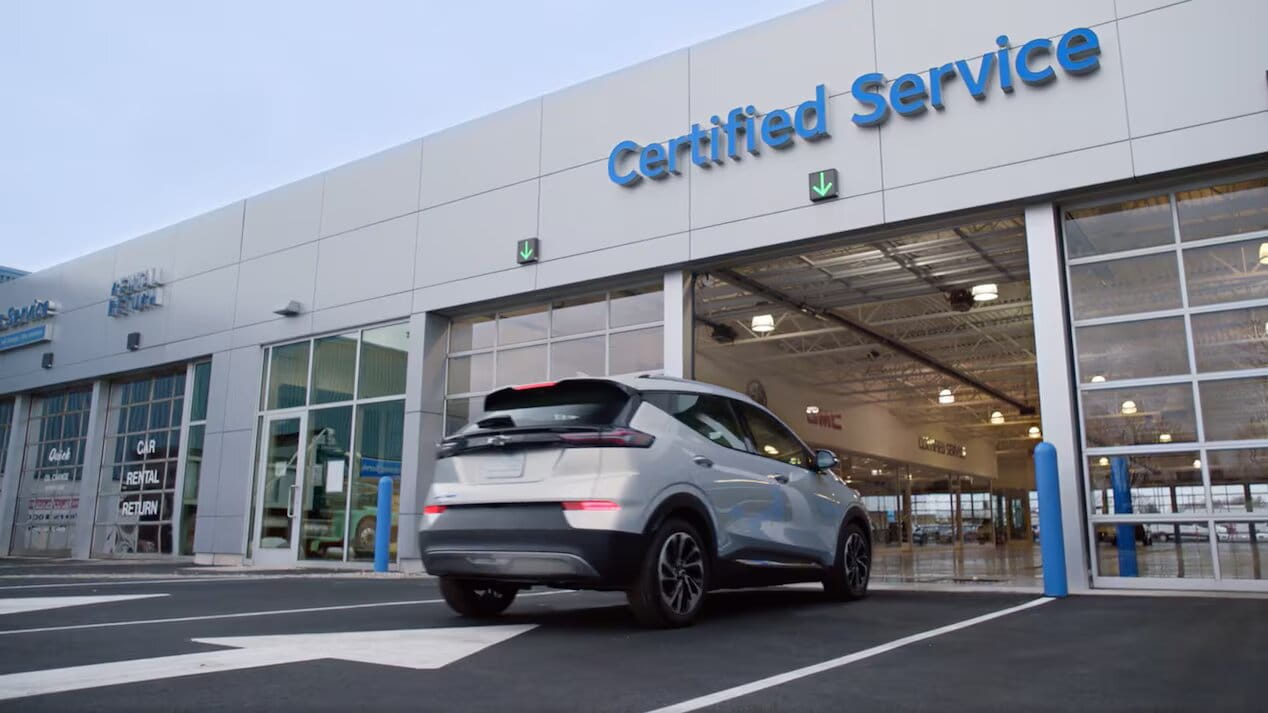
Our technicians can inspect the complete braking system while accounting for how regenerative braking operates on your Chevrolet EV. Learn more about our EV maintenance services or schedule service with Orillia Chevrolet.